Support your landscape with professionally built concrete retaining walls in Miami, FL. We design and pour walls that control erosion and create usable space. From low garden borders to tall structural walls, we focus on proper drainage, reinforcement, and a clean finished appearance.
Brava Concrete Miami provides professional concrete retaining wall throughout Miami, FL and the surrounding area. Our licensed, insured crew delivers safe, clean, on-time work with a free estimate before anything begins. Call (754) 529-4447 or request your free quote.
Concrete Retaining Walls Built for Miami Conditions
Brava Concrete Miami designs, engineers, and builds concrete retaining walls that are meant to handle South Florida soil, rain, and heat without constant repairs. A retaining wall is not just a decorative border. It is a structural system that has to hold back heavy, often waterlogged soil. In Miami, that means planning for intense downpours, high groundwater, and sandy or mixed fill soils that can shift if the wall is not designed correctly.
Before recommending any design, we look at the actual site: soil type, elevation changes, nearby structures, and how water currently runs through the property. A concrete retaining wall that holds up a driveway or pool deck needs a different approach than one that simply levels a garden bed. Brava Concrete Miami focuses on function first, then finish, so you get a wall that looks clean and modern but is primarily built not to move, lean, or crack.
Because Miami does not freeze, we do not deal with frost heave like northern markets. Instead, the main threats are water pressure behind the wall, erosion at the base, and poor drainage. We size the wall and its footing for those realities. That local focus is what keeps the wall straight years after installation instead of bowing toward your yard or neighbor’s property.
How We Design a Concrete Retaining Wall That Will Not Fail
Our design process starts with basic measurements and a load assessment. We determine wall height, length, and what it must support: just soil, or soil plus a driveway, parking area, patio, or structure nearby. Anything over roughly 3 feet in height or supporting a surcharge generally needs engineering. Brava Concrete Miami coordinates with a structural engineer when required so the design drawings match Miami-Dade code.
From there, we choose the wall type. For most residential projects, we build reinforced cast-in-place concrete retaining walls or segmental walls using concrete blocks with a reinforced concrete footing and sometimes geogrid. For higher loads or tight spaces, we typically pour a monolithic wall (footing and wall tied together) and install steel reinforcement sized specifically for the height and soil conditions.
Drainage is treated as non-negotiable. A solid concrete retaining wall without proper drainage is almost guaranteed to fail in Miami. We design a gravel backfill zone and perforated drain pipe (French drain) directly behind the wall so rainwater can move away instead of building pressure. We also include weep holes or hidden drainage outlets, depending on the wall finish, so water has a clear path out rather than pushing against the structure over time.
Step-by-Step: Our Installation Process in Miami
Brava Concrete Miami follows a consistent build process so the concrete retaining wall performs the way it was designed. First, we stake out the wall alignment and elevation, pull any required permits, and call for utility locates to avoid damaging underground lines. For taller walls or those near property lines, we verify lot surveys to ensure the wall sits in the correct location.
Excavation comes next. We dig to the specified depth for the footing, which usually means going below loose topsoil to reach stable subgrade. In Miami’s sandy areas near the coast, we often over-excavate a bit and install compacted base material so the footing does not settle. The footing is then formed, reinforced with steel rebar, and poured with concrete that meets or exceeds the engineer’s specified strength.
For cast-in-place walls, once the footing cures sufficiently, we set wall forms, place vertical and horizontal rebar on the correct spacing, and pour the wall in a single or staged pour, depending on height. Vibrating the concrete and proper finishing help reduce voids and surface defects. For segmental concrete block systems, we install the first course on a level, compacted base, then build up in courses, adding geogrid layers and backfill where required.
Backfilling and drainage installation are done carefully and in layers. We place drain pipe behind the wall, cover it with washed gravel, and compact soil in lifts behind the gravel. Rushing this step or using poor backfill is a common mistake that shortens wall life. Finally, we remove forms if used, clean the surface, and apply any specified texture, stain, or cap units.
Finish Options, Aesthetics, and Maintenance
Concrete retaining walls do not have to look industrial. Brava Concrete Miami offers several finish options so the structural wall can also improve curb appeal. For exposed cast-in-place concrete, we can use smooth trowel finishes, light broom textures, or apply a stucco or parge coat that ties into the rest of your property. For a more decorative look, we can use form liners that mimic stone patterns or board-formed concrete, then apply stains or sealers for color.
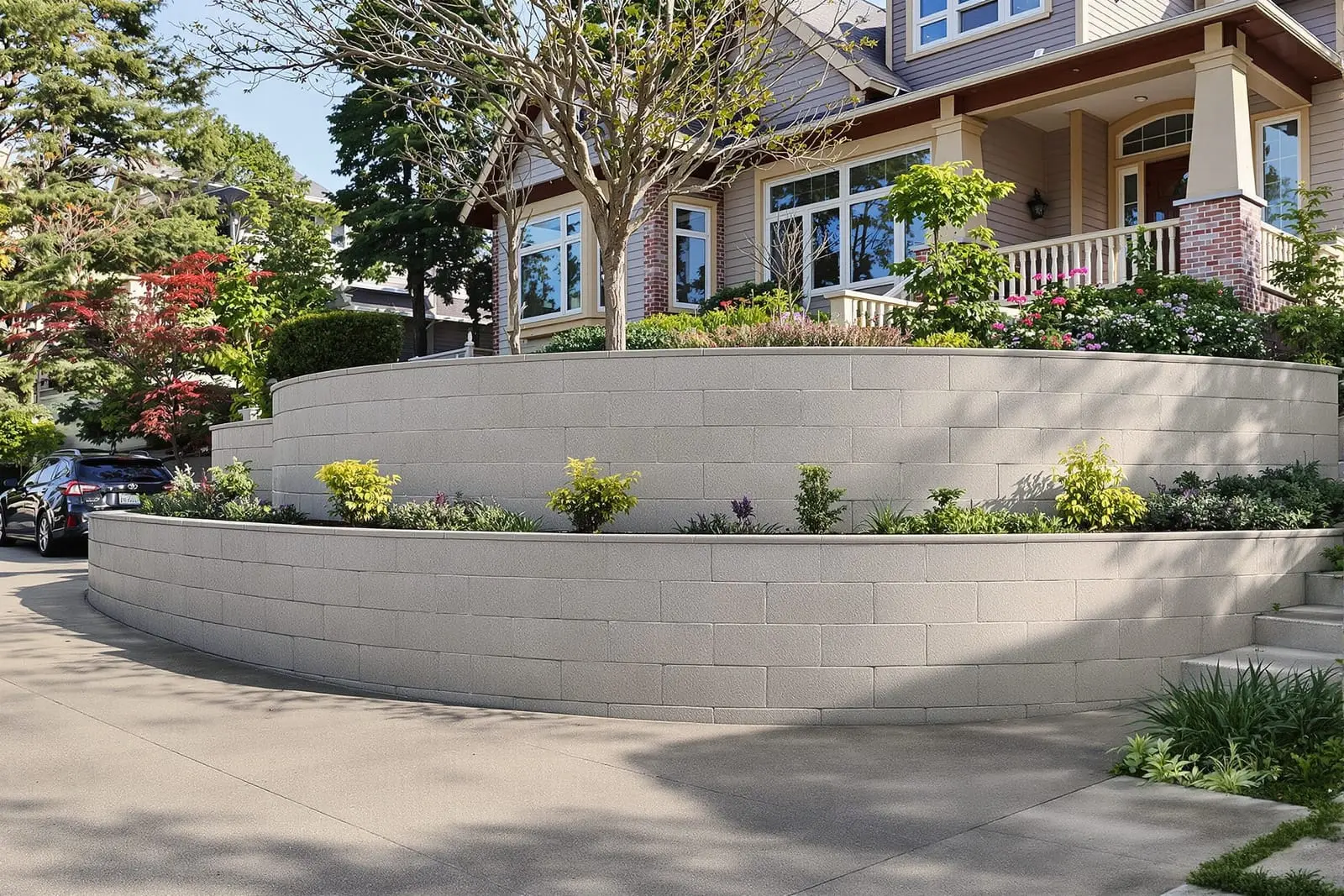
Segmental block retaining walls come in different face textures and colors, which can complement modern, coastal, or Mediterranean style homes. We also frequently add concrete cap units on top of the wall to create a clean, finished edge that can be used as seating around patios and pool areas.
Retaining walls require modest but real maintenance in Miami’s climate. We recommend inspecting the wall after major storms to check for signs of movement, new cracks, or erosion at the base. Keeping the weep holes clear, maintaining surface drainage so water does not pool at the back of the wall, and avoiding heavy new loads near the top edge all help the wall last longer. Brava Concrete Miami can also assess older walls, add surface drains or swales, and recommend repairs if you already see bulging or leaning.
What Drives the Cost of a Concrete Retaining Wall in Miami
Homeowners often want a simple price per foot, but retaining wall costs depend heavily on site conditions and structural requirements. The main factors are wall height, length, soil conditions, access for equipment, and whether engineering is required. A low concrete retaining wall to tidy up a front yard slope is very different from a tall wall that keeps a driveway stable.
If the wall is taller, loaded by a driveway or structure, or located in poor soil, we need more excavation, thicker footings, more rebar, and possibly geogrid or tiebacks. All of that adds cost but also prevents expensive failures later. Limited access, such as backyards that can only be reached through a side gate, can require smaller equipment and more labor time, which we include upfront in the estimate.
Finish choices also affect the budget. A simple structural wall that will be hidden by landscaping can be less expensive than a fully exposed architectural concrete retaining wall with liners, stains, and caps. Brava Concrete Miami provides written estimates that separate structural needs from optional upgrades so you can decide where to invest. We are direct about what is essential for safety and longevity and what is optional for appearance.
Because Miami’s rainy season typically runs from late spring through early fall, scheduling affects logistics more than material cost. When possible, we try to pour footings and walls during drier windows or plan for weather delays in the construction timeline. Working with that reality keeps projects from dragging on and helps protect fresh concrete from heavy washouts.
What Miami Homeowners Should Check Before Hiring a Retaining Wall Contractor
Before you commit to any contractor for a concrete retaining wall, confirm that they understand both structural design and local conditions. Ask for recent retaining wall projects in Miami, not just generic flatwork. A company that mainly pours driveways may not account for the drainage and soil pressure issues that come with walls.
Brava Concrete Miami is fully licensed and insured, and we are familiar with Miami-Dade permitting, inspection requirements, and common neighborhood restrictions. For taller walls, we expect to work from engineer drawings and are comfortable coordinating inspections at footing, steel placement, and final stages.
You should also look for clear details in the proposal: wall type, concrete strength, rebar size and spacing, drainage plan, backfill material, and finish. Vague quotes that simply say “build retaining wall” without specifics are a red flag. We specify the components of your concrete retaining wall so you know exactly what you are paying for.
Finally, make sure the contractor addresses surface water management around the wall. In Miami, a well built retaining wall that receives uncontrolled roof runoff or landscape irrigation directly at the back can still fail. Part of our process is reviewing how existing gutters, downspouts, and grading will interact with the new wall and suggesting adjustments that protect your investment.
“
Professional concrete retaining walls, done right the first time, quality materials, honest pricing, and results that last.