Support heavy traffic and equipment with industrial concrete floors in Miami, FL. We pour and finish warehouse slabs designed for forklifts, racking, and machinery. Our work focuses on flatness, joint layout, and reinforcement so your operation runs smoothly on a durable surface.
Brava Concrete Miami provides professional industrial concrete floors throughout Miami, FL and the surrounding area. Our licensed, insured crew delivers safe, clean, on-time work with a free estimate before anything begins. Call (754) 529-4447 or request your free quote.
Industrial concrete floors built for real Miami warehouse conditions
Industrial concrete floors in Miami have to deal with more than just forklift traffic. Heat, humidity, and high groundwater can all shorten the life of a floor if it is not designed correctly from the start. Brava Concrete Miami focuses on warehouse and industrial concrete floors that match how the building is actually used, not just what looks good on a drawing.
We begin with a site visit. We look at slab thickness, vapor conditions, joint layout, and how the material handling equipment will move through the space. A light pallet warehouse in Doral does not need the same slab design as a cold storage facility near the river or a cross-dock operation close to the airport. During this visit we also check existing floor conditions if it is a remodel. We look for slab curling, joint spalling, slab heaving, and cracks that telegraph through coatings. The goal is to understand what the floor has to withstand each day so we can design a mix and reinforcement approach that holds up for years.
For new warehouse construction, we coordinate with your GC, engineer, and sometimes the City of Miami Building Department to confirm that the floor section matches the permitted plans. If the building is in unincorporated Miami-Dade or an industrial park with its own standards, we review any minimum slab thickness, reinforcement, or flatness requirements early so there are no surprises when the inspector arrives.
How we design and pour warehouse and industrial floors
A solid industrial concrete floor starts with the base. In South Florida, poor subgrade prep is one of the top causes of failed warehouse slabs. Brava Concrete Miami evaluates soil and base compaction, often recommending a compacted limerock base and, where needed, a vapor barrier suited to Miami’s high groundwater and moisture levels. In existing buildings, we check for soft spots and pump underlayment or replace sections of base so the new slab does not settle unevenly.
We then decide on slab thickness and reinforcement. Typical warehouse floors here range from 5 to 8 inches, but heavy racking systems, high-bay order pickers, or point loads from machinery can push that thicker. We explain the tradeoffs between conventional rebar, welded wire mesh, and steel or synthetic fiber reinforcement. Fibers help control shrinkage cracking, which is important in our hot climate, but they do not replace structural steel where loads demand it.
Concrete mix design is another key step. For industrial concrete floors we usually work in the 4,000 to 5,000 psi range, sometimes higher for heavy-duty or freezer environments. In Miami, we like lower water-to-cement ratios and admixtures that slow down set time. That lets us place and finish properly even when temperatures and humidity are high. We also plan pour sizes and timing so there is enough crew and finishing equipment on site, which is critical to hit warehouse flatness standards that keep forklifts stable and racking safe.
Pour day is tightly sequenced. We place concrete using laser-guided screeds when floor flatness is critical, such as for very narrow aisle (VNA) racking. Our finishers use ride-on trowels to create a dense, hard surface that resists tire wear and oil staining. We cut control joints at the right spacing to manage shrinkage cracking and we dowel key traffic joints to handle forklift crossings without chipping. In active warehouses, we phase pours so operations can continue with minimal downtime.
Finishes, coatings, and options for high-performance industrial floors
Not every industrial concrete floor in Miami needs the same finish. Brava Concrete Miami walks you through options based on cleanliness requirements, traffic, and exposure to chemicals or moisture.
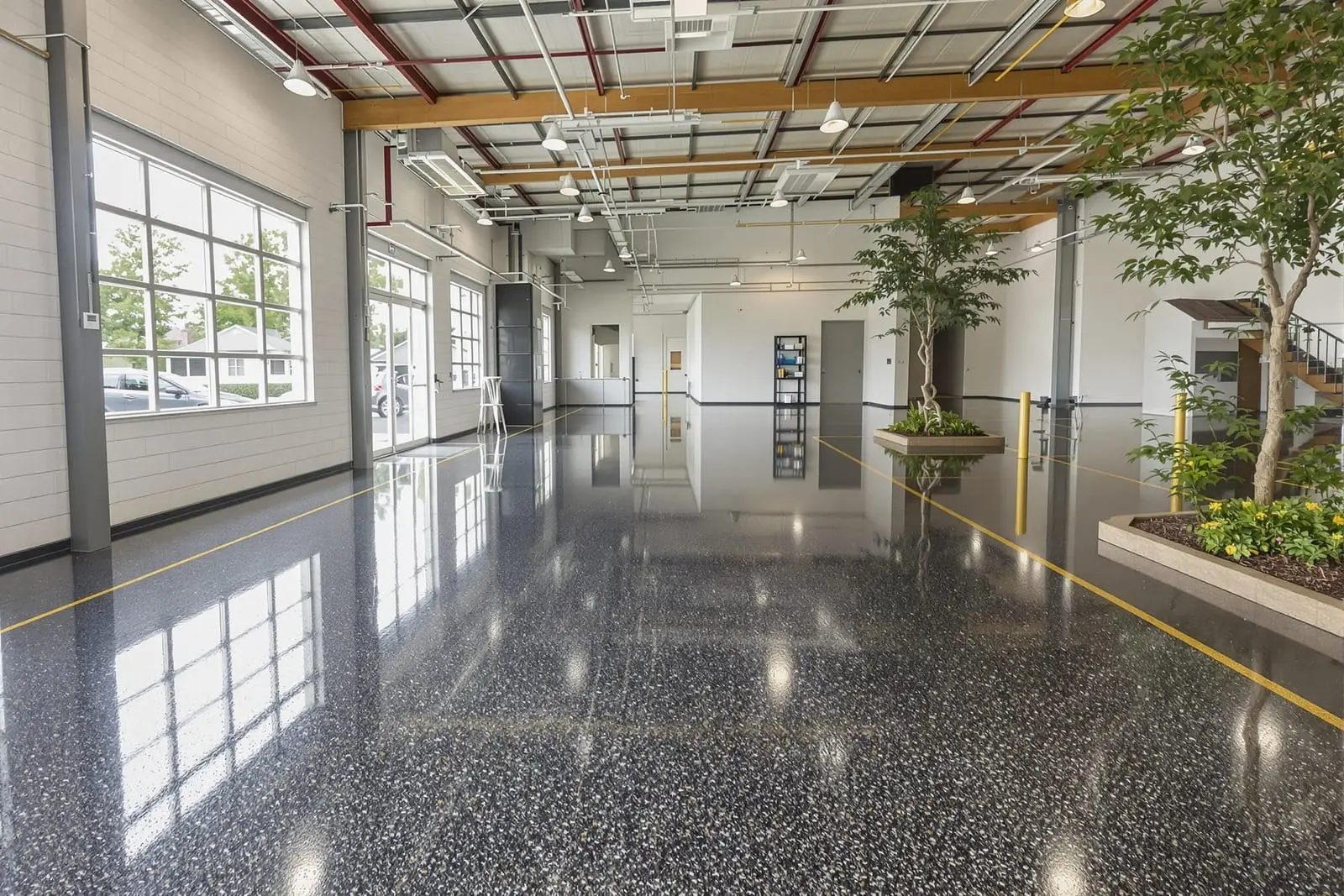
For many distribution centers and standard warehouses, a hard-troweled plain concrete finish with a clear penetrating sealer is enough. It creates a dense surface that sheds dust and cleans easily. We often add dry shake hardeners in high traffic forklift aisles to increase surface abrasion resistance. For facilities that store food, pharmaceuticals, or electronics, we may recommend a polished concrete system. Polished floors reduce dust, are easier to sanitize, and improve lighting reflectivity, which can reduce lighting costs in large buildings.
Where chemical resistance is important, such as maintenance bays, manufacturing lines, or bottling facilities, we look at epoxy or urethane coatings. Miami’s humidity means surface prep is critical. We mechanically grind the slab, test for moisture vapor emission, and choose systems that tolerate local conditions. For example, in older Miami warehouses where there is no vapor barrier under the slab, we may specify moisture-mitigating primers so the coating does not blister.
Slip resistance is another key decision. In areas that stay dry, a smoother finish is fine and allows forklifts to run quietly. In wet loading docks or near washdown zones, we add texture or slip-resistant aggregates to help prevent accidents. We also discuss floor striping, safety markings, and different color zones for staging, pedestrian paths, and equipment areas so your floor supports safer operations, not just heavy loads.
Common industrial floor problems in Miami and how we prevent them
Many warehouse owners in Miami call us after something has already gone wrong with their floors. Understanding the common issues helps you avoid them on a new project.
Moisture-related problems are at the top of the list. Our climate pushes moisture vapor through slabs, which can cause delamination of coatings, persistent humidity in storage areas, or mold on pallets. Brava Concrete Miami uses appropriate vapor barriers on new slabs and performs moisture testing on existing floors before any coating or overlay is installed. When levels are too high, we use mitigation systems instead of gambling on a failure.
Joint damage is another frequent problem. Forklift wheels crossing poorly designed or undoweled joints will chip away concrete edges until the joints become potholes. We prevent this by careful joint layout that aligns with rack aisles and doorways, proper saw-cut timing, and, where traffic is heavy, doweled joints and high-strength joint fillers that can be shaved flush and reprofiled if needed.
Cracking and slab curling often trace back to poor mix design or curing practices, especially when the contractor tries to speed through work in the heat. We control water content, use appropriate admixtures, and follow a curing plan that fits Miami weather. That might be curing compounds or, for some projects, wet curing under poly sheeting to slow down moisture loss. These steps help keep the slab stable and reduce costly repairs later.
For older warehouses, we provide repair solutions that target the root cause. That might mean slab stabilization by pressure grouting voids, joint rebuilding with semi-rigid epoxies, or overlay systems that restore flatness in aisles needed for tall racking and high-mast lifts.
Pricing, scheduling, and what to expect from Brava Concrete Miami
The cost of industrial concrete floors in Miami depends on a few main factors: slab thickness, reinforcement type, finish or coating system, access to the site, and how much operational downtime you can allow. Thicker slabs with steel reinforcement and specialty coatings cost more, but they may be the only safe option under heavy racking or machinery. Complex phasing in an active warehouse can add labor, since our crews have to work around existing operations and pour at off-hours.
Brava Concrete Miami prepares clear, itemized proposals. We separate structural slab work from finishes and coatings so you can see exactly where your budget is going. During planning, we often help warehouse owners choose where to spend and where to save. For example, you might need the highest-spec floor only in high-bay storage aisles and loading docks, while lighter-use staging zones can use a simpler finish.
Scheduling is handled with your operations in mind. For new buildings, we coordinate around other trades and inspections from the City of Miami or Miami-Dade County inspectors. For active facilities, we can schedule night or weekend pours, work in sections, and set realistic return-to-service times based on mix design and coating cure periods. We want your team to know exactly which areas will be closed, when, and for how long.
Before you hire any contractor for industrial concrete floors, ask how they handle mix design in hot weather, how they plan joint layout for your specific racking plan, and what moisture testing they perform before coatings. At Brava Concrete Miami, these are standard parts of every project, not extras. If you would like, we can walk your existing floor, point out likely failure points, and outline a phased plan to upgrade or replace sections without shutting down your entire warehouse.
“
Professional warehouse & industrial concrete floors, done right the first time, quality materials, honest pricing, and results that last.
Brava Concrete Miami
Warehouse & Industrial Concrete Floors Across Our Service Area